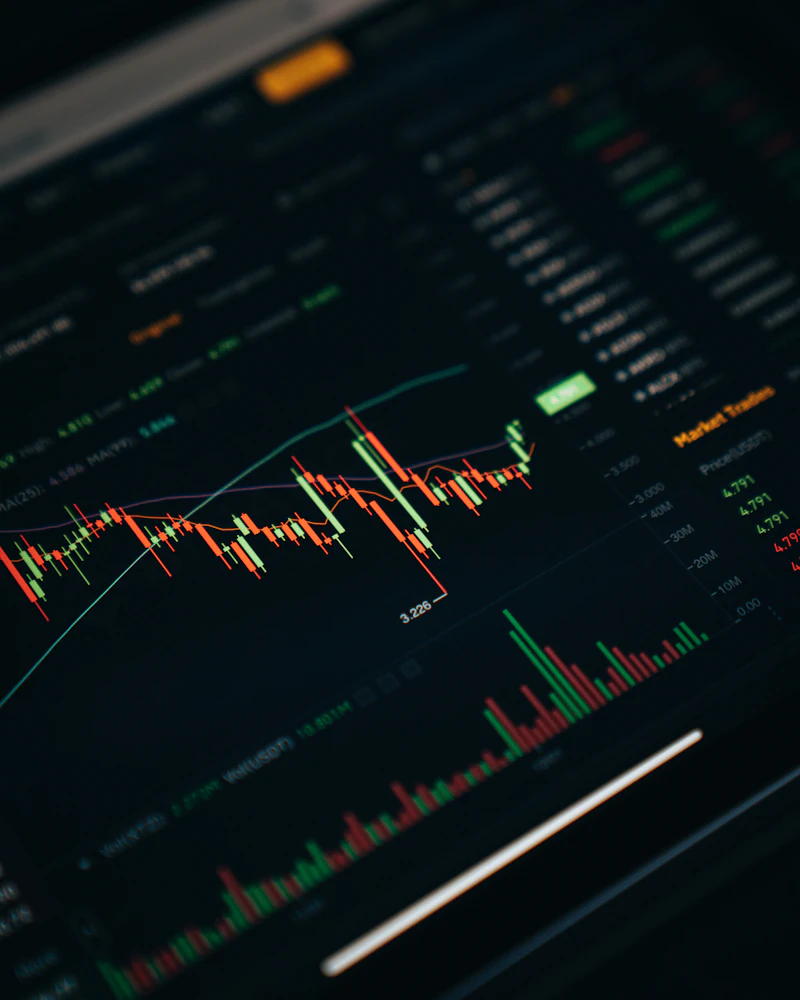
How to Track Solana Whales: Wallets, Tools and Alerts Explained
- Primary Signal: How to Track Solana Whales: Wallets, Tools and Alerts Explained
- Overview: A single wallet moving 100,000 SOL can shift a small token by double digits. Here is how to track Solana whales with free tools, what counts as a whale, and which signals actually ...
- Verification: Analyzed and compiled by CryptoAce VIP editorial monitoring desk.
Solana whales move fast, and their trades show up on-chain within seconds. A single wallet moving 100,000 SOL, worth roughly ten million dollars, can shift the price of a small token by double digits. Tracking these wallets is not about copying their trades blindly. It is about reading where serious capital is going before the rest of the market notices, and knowing which signals matter and which are noise.
Solana is different from Bitcoin and Ethereum in ways that change how whale tracking works. Transactions are cheap and fast, so whales move funds constantly, and the network hosts thousands of tokens with tiny market caps where a single large wallet can dominate the supply. That makes Solana whale tracking both more rewarding and more dangerous. The signals are louder, but the false signals are louder too.
What Counts As A Solana Whale
There is no official threshold, but most trackers treat a wallet holding 100,000 SOL or more as a whale, which is roughly ten million dollars at recent prices. For individual tokens, the threshold is relative: a wallet holding 1 percent or more of a token's supply can move its price, and a wallet holding 5 percent or more effectively controls it. Always check the holder distribution on Solscan before you trust any signal. If the top 10 wallets hold 80 percent of a token, the token is a whale playground and retail traders are the exit liquidity.
The most important distinction is between a genuine individual whale and a structural wallet. Exchange wallets, staking pools, liquidity pools and market-maker wallets all hold enormous amounts of SOL, but they are not making trading decisions. A transfer from a Binance hot wallet to a cold wallet is custody housekeeping, not a market signal. Use a labelling tool such as Arkham or Nansen to identify what a wallet actually is before you read anything into its movements.
Tools For Tracking Solana Whales
Whale Alert covers Solana and posts alerts on X and Telegram whenever a large transfer crosses its threshold, usually one million dollars or more. It is the fastest way to hear about a big move, but it tells you what moved, not why. Solscan is the block explorer where you can inspect any wallet: its balance, its transaction history, and every token it holds. Bookmark the wallets you care about and check them directly rather than relying on alerts alone.
Arkham Intelligence labels Solana wallets by entity, clusters addresses controlled by the same owner, and lets you set alerts on specific wallets or entities. Nansen labels wallets as Smart Money when they have a track record of profitable trades, and its Solana coverage has improved steadily through 2026. For token-specific tracking, Birdeye and Dexscreener show holder distribution, recent large trades, and whether the top holders are buying or selling. Combine two or three tools rather than trusting one.
Reading The Signals That Matter
Only two movements really matter, and direction is everything. Exchange inflows, when SOL or a token moves from private wallets into an exchange, mean the holder is positioning to sell. Sustained inflows across several large wallets, above the 30-day baseline, have historically preceded price drops. Exchange outflows, when assets leave exchanges for private wallets, mean accumulation. A whale pulling SOL off an exchange is reducing liquid supply and probably has no intention of selling soon.
Everything else is usually noise. Wallet-to-wallet transfers are often one entity moving funds between its own addresses. Transfers to a staking contract or a liquidity pool are structural, not directional. And a single large transfer is rarely a signal on its own. Wait for a pattern: the same wallet moving repeatedly in one direction, several large wallets moving the same way, and a divergence between whale behaviour and retail sentiment. That combination is worth paying attention to. A single alert is not.
Q: How do I track Solana whales for free?
A: Start with Whale Alert on X or Telegram for large-transfer alerts, Solscan for inspecting any wallet's balance and history, and Arkham's free tier for entity labels and wallet alerts. Those three free tools cover most of what an individual trader needs.
Q: How much SOL makes a wallet a whale?
A: Most trackers use 100,000 SOL, roughly ten million dollars, as the threshold. For individual tokens the threshold is relative: a wallet holding 1 percent or more of a token's supply can move its price, so check the holder distribution before judging a transfer.
Q: Should I copy Solana whale trades?
A: No, not directly. Whale alerts arrive after the trade has happened, and you do not know the whale's full position, its cost basis, or its time horizon. Use whale tracking as context for your own research, not as a buy signal.
More from CryptoAce VIP