El USDC procesó 36 billones de dólares en transacciones del primer semestre, pero Circle se quedó con solo 7 centavos de cada dólar de ingresos
Story summary
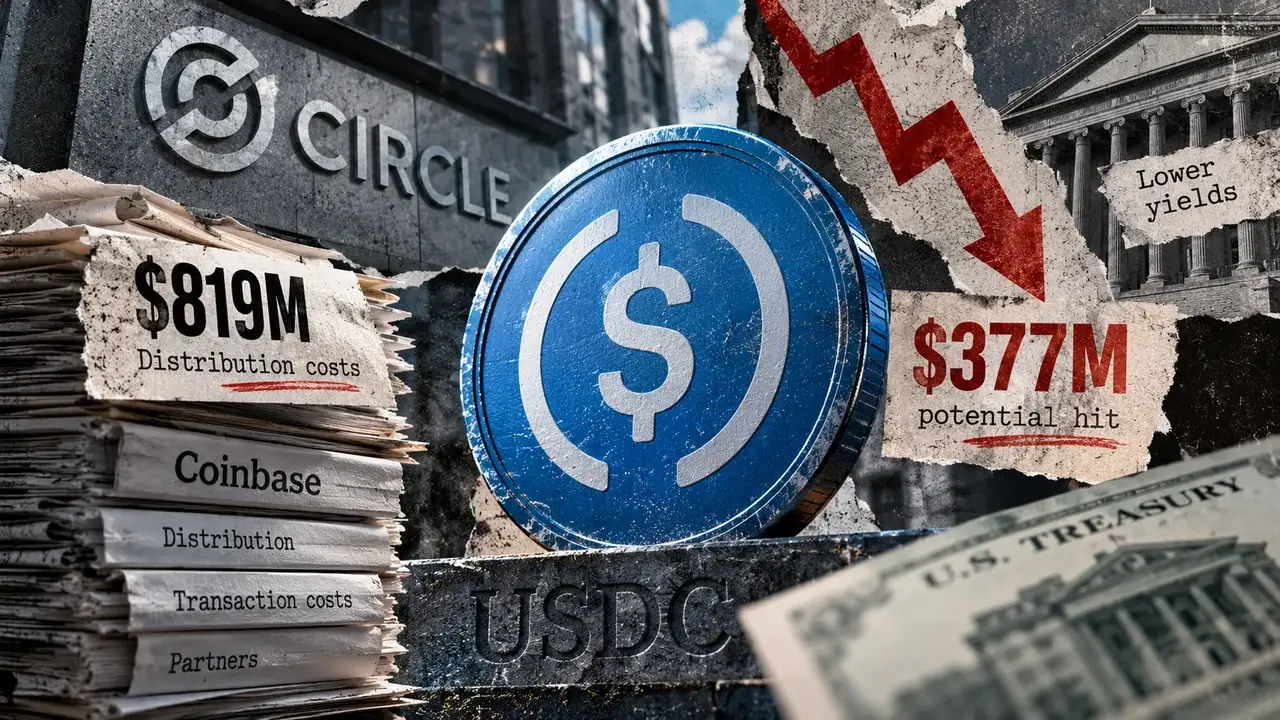
El emisor de Stablecoin, Circle, gastó el 93% de sus ingresos del primer semestre en distribución, operaciones e inversión, ya que el USDC procesó más de 36 billones de dólares en transacciones. El emisor de la moneda estable generó alrededor de 1.400 millones de dólares en ingresos en los primeros seis meses de 2026, pero 819 millones de dólares se destinaron a la parte de distribución.
📌 Key Highlights & Takeaways
- El emisor de Stablecoin, Circle, gastó el 93% de sus ingresos del primer semestre en distribución, operaciones e inversión, ya que el USDC procesó más de 36 billones de dólares en transacciones.
- El emisor de la moneda estable generó alrededor de 1.400 millones de dólares en ingresos en los primeros seis meses de 2026, pero 819 millones de dólares se destinaron a la parte de distribución.
Stablecoin issuer Circle spent 93% of its first-half revenue on distribution, operations, and investment as USDC processed more than $36 trillion in transactions. The stablecoin issuer generated about $1.4 billion in revenue in the first six months of 2026, but $819 million went to distribution partners and transaction costs, while another $473 million covered operating…
Understand the crypto stories that matter and what to watch next. Get The Catalyst in your inbox
From an on-chain analytics and liquidity distribution perspective, developments around "El USDC procesó 36 billones de dólares en transacciones del primer semestre, pero Circle se quedó con solo 7 centavos de cada dólar de ingresos" signal important shifts in network participation. Market participants observe that derivative funding metrics, exchange reserve telemetry, and smart contract protocol interactions reflect cautious accumulation alongside disciplined risk hedging across the sector.
Technical research analysts at CryptoAce VIP note that high-density order book clusters and volume-weighted average price (VWAP) benchmarks near recent consolidation floors will serve as pivotal indicators. Market observers are advised to cross-examine telemetry on verified block explorers before making capital allocations.
Editorial Fact-Check & Verification Note: This briefing was curated, corroborated, and synthesized by the CryptoAce VIP Editorial Desk. Readers following "El USDC procesó 36 billones de dólares en transacciones del primer semestre, pero Circle se quedó con solo 7 centavos de cada dólar de ingresos" are encouraged to review the full primary source coverage linked below for complete historical context, direct quotes, and official statements.
Crypto Profit & Yield Calculator
Simulate trading returns, staking APY, and crypto gains with real-time fee modeling.
Source: CryptoSlate.
Read the full story at the original source ↗
For questions: mrsmithcons@gmail.com.
❓ Frequently Asked Questions (Whale Tracking Briefing)
What on-chain catalyst or market signal triggered this Whale Tracking movement?
Institutional on-chain telemetry, cold storage accumulation, and derivative funding rates indicate spot liquidity positioning that underpins this Whale Tracking development.
How should investors interpret current liquidity pools and network hash activity?
Derivative funding remains balanced and exchange reserves continue trending downward, mitigating systemic liquidation cascades and strengthening the underlying structural floor.
Where are the critical technical support and invalidation levels?
Anchored volume-weighted average price (VWAP) benchmarks and high-density order book clusters near prior consolidation ranges serve as key risk management thresholds.
💎 On-Chain Wallet Tracking & Breakout Targets
Direct wallet address monitoring, smart money flows, and liquidity depth.
⚡ Track Whale Wallets Now ➔More from CryptoAce VIP


When my wife filed for divorce, I held 330 million dollars worth of Bitcoin. | Part 1/2 | English
Once a wealthy heir, Kai Hayes lost everything when his family’s business was sabotaged. For seven years, he w...
 🎉 FreeFortune Rewards
BMW's Co-Branded Credit Card Just Got a Serious Upgrade: 3X Rewards and a 10,000-Point Head Start
U.S. Bank and BMW Financial Services unveiled expanded rewards for BMW, MINI and BMW Motorrad cardholders this...
Create a UGC ad with just ONE prompt
Create a UGC ad with just ONE prompt 🤯✨ No complicated editing, no long process — just give AI your product a...
 📈 1UpTrade Live
Las opciones de venta de acciones de Binance bloquean reservas completas de USDC para los vendedores
Las preguntas frecuentes del vendedor de Binance requieren fondos de compra completos y permiten la asignación...