Why real-time election odds are misleading prediction market crypto traders
Story summary
You can be right about who will win an election and still pay too much to bet on it. On prediction markets, the price available when you open the app may be gone by the time you try to buy, especially when news sends other traders rushing toward the same outcome. It took very little […] The post Why
📌 Key Highlights & Takeaways
- You can be right about who will win an election and still pay too much to bet on it.
- On prediction markets, the price available when you open the app may be gone by the time you try to buy, especially when news sends other traders rushing toward the same outcome.
- It took very little […] The post Why
You can be right about who will win an election and still pay too much to bet on it. On prediction markets, the price available when you open the app may be gone by the time you try to buy, especially when news sends other traders rushing toward the same outcome.
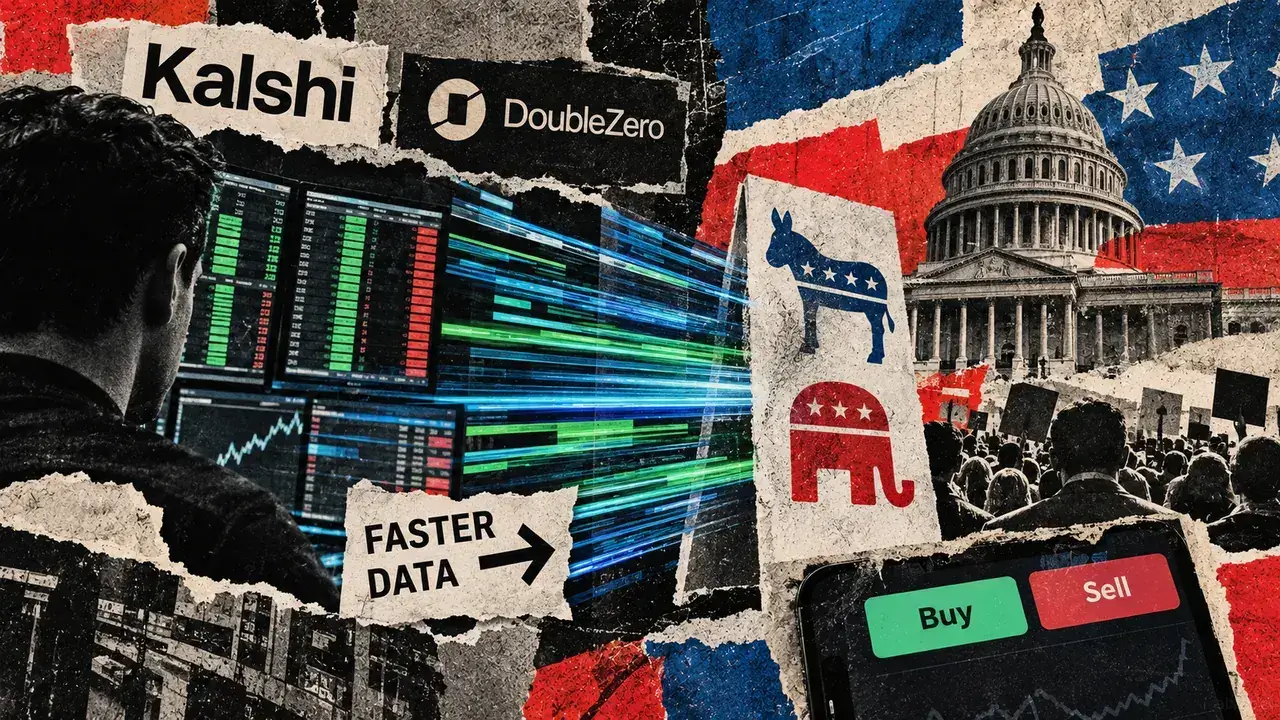
It took very little time for the market to see a business opportunity in this. On Sept. 9, DoubleZero announced that it had added Kalshi's election and politics markets to Edge, a service designed to deliver trading data over a dedicated network. It carries the exchange's order book, showing the prices and quantities people are willing to buy and sell.
DoubleZero told CryptoSlate that faster, more dependable information can help professional trading companies offer better prices. If competition passes those savings to customers, ordinary bettors could benefit. But using the feed effectively requires software and money, giving well-equipped companies another way to compete with people placing bets on their phones.
Election betting seems to be the great equalizer for both professional trading companies and retail users. Some participants want to back a political judgment for months; others want to profit from the next movement in price. Faster data serves that second business particularly well.
On Kalshi , a standard yes-or-no contract pays $1 if its outcome happens and nothing if it doesn't. Buy a yes contract for 60 cents, and you're risking 60 cents for a potential 40-cent profit before fees. The price is commonly interpreted as roughly a 60% probability, though costs and trading conditions can erode that number quite a bit.
You can also sell before the election. Suppose you buy 1,000 contracts at 60 cents and sell them at 65 cents. Provided both trades execute at those prices, you've earned $50 before fees, regardless of who eventually wins. Predicting the next buyer's willingness to pay can therefore be profitable long before you know the actual outcome of the election.
That gives traders a reason to follow the order book . Its best bid is the highest price a buyer offers, and its best offer is the lowest price a seller accepts. The gap between them is the spread. The quantities available tell you how much can trade before buyers or sellers have to accept another price.
Imagine good news about a candidate prompts traders to buy. Someone receiving updates quickly can see the cheaper offers being taken and reassess what to pay. Someone looking at an older view might still see contracts that have already sold. Their purchase depends on what's available when their order reaches the exchange.
Crypto Profit & Yield Calculator
Simulate trading returns, staking APY, and crypto gains with real-time fee modeling.
Source: CryptoSlate.
On-Chain Whale Radar: Smart Money Cold Wallet Outflows & High-Yield DeFi Opportunities
Uncover high-yield crypto alpha, on-chain whale accumulation alerts, 100x altcoin gems, and automated DeFi yield opportunities before the retail crowd.
Track Whale Wallets ➔💎 On-Chain Wallet Tracking & Breakout Targets
Direct wallet address monitoring, smart money flows, and liquidity depth.
⚡ Track Whale Wallets Now ➔More from CryptoAce VIP
 ⚡ LiveCoin Bet
Bittensor Commons Confirms Exploit Summit 2026 for Montreal, September 28-29
Bittensor Commons has confirmed the full details of Exploit Summit 2026, the Bittensor ecosystem’s native conf...
 📈 1UpTrade Live
Tag Markets Grew To One Million Clients In Three Years Inspiring Indian Forex Traders
Breaking coverage reported by Republic World: Tag Markets Grew To One Million Clients In Three Years Inspiring...
 🤖 1UpTrade Quant
Trade Ideas AI Trading Bot Review 2026: Real-Time Stock Scanner
Breaking coverage: Trade Ideas AI Trading Bot Review 2026: Real-Time Stock Scanner. Comprehensive monitoring, ...
 🚀 RocketCoin Casino
How to Audit A Crypto Casino Yourself
Breaking coverage reported by Talk Android: How to Audit A Crypto Casino Yourself. Our news desk tracks ongoin...